
Rolex Datejust Buying Guide: Dials, Bezels, Bracelets and Reference Numbers Decoded
Most Rolex models give you two or three choices. The Datejust gives you dozens, which is why people freeze at the display case. This rolex datejust buying guide makes the decision tree legible: pick a size, a metal, a bezel, a dial and a bracelet, and the reference number falls out the other end.
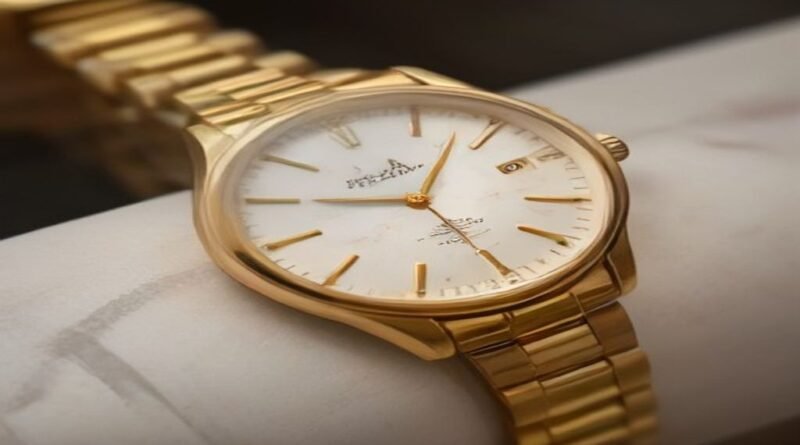
The Datejust has been in production since the mid-1940s, and Rolex has never stopped adjusting the recipe. You are not shopping one watch but eighty years of variations. A 36mm steel model on an Oyster bracelet with a smooth bezel and black dial reads as a quiet tool watch. The same case in yellow Rolesor with a fluted bezel, Jubilee bracelet and champagne dial reads as dress jewelry. Same family, different signal entirely. You may also try some rolex replica watch.
Why the Datejust Is the Most Configurable Rolex
Rolex builds the Datejust as a platform. Case, movement and date mechanism stay constant within a size class, while bezel, dial, bracelet and metal are swappable specification lines. The live catalog carries well over a hundred combinations, and the back-catalog adds hundreds more.
Two consequences follow. You can find a configuration matching your taste precisely rather than settling. And resale value varies enormously between them, so know which side of that line you stand on.
Size: 31, 36 or 41
Rolex currently produces the Datejust in 31mm, 36mm and 41mm, with 28mm sold as the Lady-Datejust. A 34mm size appears on the vintage market.
- 31mm — suits wrists under roughly 6.5 inches, and carries many decorative dial and bezel options.
- 36mm — the classic proportion and safest default, comfortable from about 6 to 7.5 inches.
- 41mm — broader lugs and a wider dial opening make it wear closer to 42mm. Best above 7 inches.
Try both on before committing. Photos lie about case size more than any spec.
Bezels: Smooth, Fluted, Domed and Diamond-Set
The bezel shapes the watch’s character more than the dial does.
| Bezel | Material typically used | Visual effect | Notes |
|---|---|---|---|
| Smooth / domed | Oystersteel or solid gold | Quiet, tool-like, widest dial opening | The understated pick |
| Fluted | White, yellow or Everose gold | Bright, faceted, catches light | The signature Datejust look |
| Engine-turned | Steel (historic) | Textured, subtle | Discontinued; vintage references only |
| Diamond-set | Gold with set stones | Overtly luxurious | Verify factory setting |
A steel Datejust with a fluted bezel always has a solid gold bezel, since Rolex does not flute steel on current production. Treat cheap “all steel, fluted” listings with suspicion.
Metals and Two-Tone Rolesor
Rolex calls its steel-and-gold combinations Rolesor: yellow, Everose and white. White Rolesor is the sleeper — a steel case and bracelet with a white gold fluted bezel, so it reads as steel from a distance while still getting the fluting.
Approximate 2026 US retail bands, to confirm with an authorized dealer at purchase:
- Oystersteel, 36mm or 41mm: roughly $8,000–$10,500
- Yellow or Everose Rolesor: roughly $14,000–$20,000
- Solid gold: roughly $28,000–$50,000 depending on gem content
Dials: Where the Personality Lives
Rolex refreshes dials constantly, which is why a five-year-old configuration can already be gone. Options include sunburst metallics, lacquered blacks and whites, mother-of-pearl, and two textured motifs worth calling out.
Palm and fluted motif dials
The palm motif uses a stylized frond pattern; the fluted motif echoes the bezel’s grooves across the dial. Both look far better in person than in photos, so find video before buying online.
Diamond hour markers
Factory diamond markers add meaningfully to price and narrow your resale pool. Aftermarket setting does worse — it typically erases any premium and complicates Rolex service eligibility for that component. Insist on factory documentation.
Roman numeral variants
A slate dial with green Roman numerals on the outer track is among the most requested configurations, with long authorized dealer waitlists and a secondary-market premium over retail.
Bracelets: Oyster vs Jubilee
The Oyster uses three flat links and reads sporty. The Jubilee uses five smaller links, wears softer and is the traditional choice. Neither is better; the Jubilee catches light, the Oyster disappears.
The President bracelet belongs to the Day-Date and Lady-Datejust, not the standard Datejust. Any listing offering a “President Datejust 41” deserves scrutiny.
Both current bracelets use the Oysterclasp with a 5mm tool-free extension, which earns its keep on hot days.
How to Read a Datejust Reference Number
Rolex does not publish its numbering scheme, but the pattern is consistent enough to use as a verification tool. Read from the right.
- Last digit — case and bracelet metal. Commonly 0 for Oystersteel, 3 for yellow Rolesor, 4 for white Rolesor, 1 for Everose Rolesor, higher digits for solid gold.
- Second-to-last digit — bezel. Commonly 0 for smooth or domed, 3 for fluted, 9 for diamond-set.
- Leading digits — model family and case diameter.
- A leading 1 added to an older number generally signals a newer movement generation.
A reference described as “fluted bezel, yellow Rolesor, 41mm, current generation” should decode consistently at all four positions. When it does not, ask why.
Generation Differences on the Used Market
| Era | Movement generation | Key traits |
|---|---|---|
| 1960s–1970s | Early automatics | Acrylic crystal, hollow end links, folded bracelet links |
| 1980s–2000s | Mid-generation calibers | Sapphire crystal, quickset date, many still hollow end links |
| 2000s–2018 | Mature caliber, roughly 48h reserve | Solid end links, far better bracelet feel |
| 2018–present | Current caliber, roughly 70h reserve | Longer reserve, tighter regulation, current warranty terms |
The bracelet upgrade is the biggest quality-of-life jump. If budget forces a choice between a rare dial on an old bracelet and a plain dial on a modern one, wear both first.
Rolex Datejust Buying Guide: Configuration Advice by Use Case
- One watch for everything: 36mm or 41mm Oystersteel, smooth bezel, Oyster bracelet, dark dial.
- Office and formal lean: white Rolesor, fluted bezel, Jubilee, silver or slate dial.
- Maximum presence: yellow Rolesor, fluted bezel, Jubilee, champagne or textured dial.
- Best liquidity: steel or white Rolesor, fluted, Jubilee, unmodified, full box and papers.
- Smaller wrist, dressy intent: 31mm Rolesor with mother-of-pearl or a motif dial.
Key Takeaways
- Decide size, metal, bezel, dial, bracelet in that order and the choice stops being overwhelming.
- Fluted bezels are always gold, even on otherwise steel watches — price accordingly.
- Factory gem-setting is documented; aftermarket setting is a value and serviceability problem.
- The reference number encodes metal and bezel, so use it to audit any listing.
- Post-2018 references gain roughly 70 hours of reserve; post-2000s references gain solid end links.
- All prices here are approximate and should be verified at the time of purchase.
Frequently Asked Questions
Is the Datejust 36 or 41 the better buy?
Neither dominates. The 36 is the historically correct proportion; the 41 reads modern on a larger wrist. Demand is healthy for both, so wrist size and taste should decide rather than investment logic.
Does a Jubilee bracelet cost more than an Oyster?
At retail the gap within a reference family is usually modest. On the secondary market, Jubilee versions of popular dials sometimes trade higher because more buyers want them. Confirm current pricing rather than assuming.
Can I swap from Oyster to Jubilee later?
Physically yes, with the correct bracelet and end links for your exact reference. Practically it is expensive, and bracelets are not always available for older references. Buy the one you want up front.
Are two-tone Datejusts a bad investment?
Not inherently, but they are more fashion-cyclical than steel, and demand has risen since the early 2020s. If you like the look, buy it. If you are storing value, steel and white Rolesor behave more predictably.
How do I confirm a dial is original?
Compare printing against known factory examples of the same reference, check that applied markers sit cleanly, and look for service dial designations. A watchmaker with Rolex experience can confirm in minutes where a photograph cannot. Request macro images first.
Final Thoughts
The Datejust rewards deliberate buyers. Work through this rolex datejust buying guide in order, verify the reference number against what you were told, and you end up with a watch that suits how you actually live rather than whatever sat in the case that day. Take the extra week to try both sizes on.
